
At First Choice, your family’s safety is always our top priority. Before we dive into the essentials of carbon monoxide protection, let us start by saying this clearly: when it comes to heating in Fenton, your home deserves reliable comfort backed by real safety expertise.
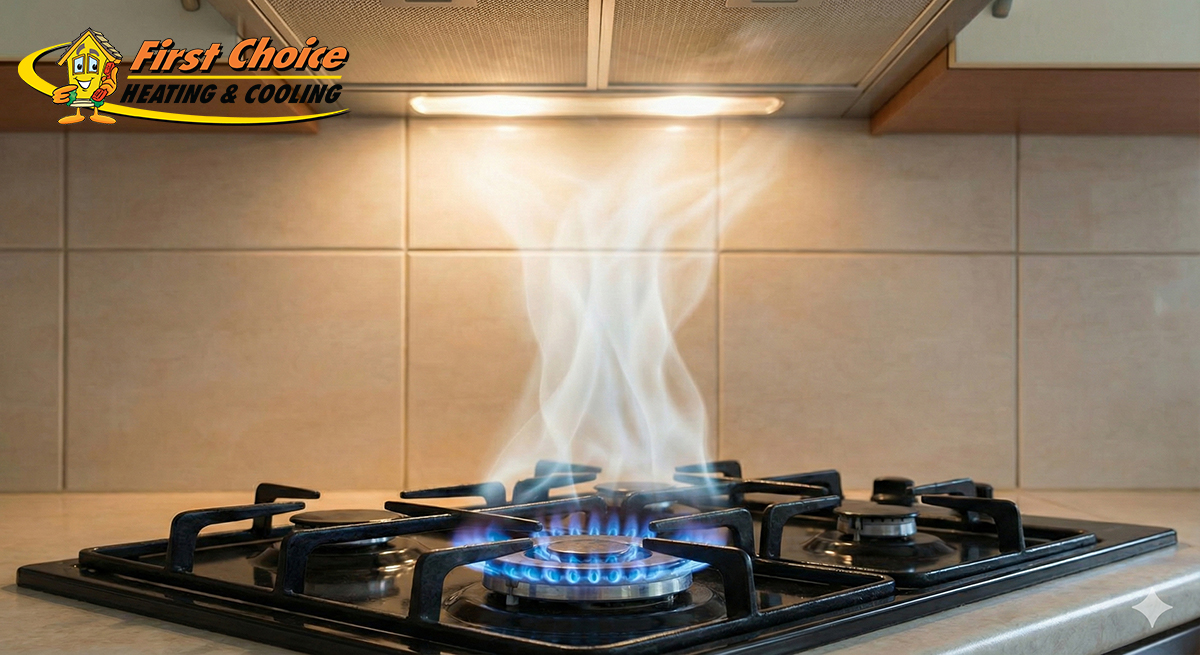
Understanding the Hidden Dangers of Carbon Monoxide in Your Home
Carbon monoxide (CO) is often called the “silent killer” for a reason—it’s colorless, odorless, and impossible to detect without proper equipment. When fuel-burning appliances such as furnaces, boilers, or gas water heaters don’t burn fuel completely, CO can build up inside the home. Even low levels can cause headaches, dizziness, and nausea. Higher levels become life-threatening within minutes.
Because CO gives no warning, prevention is the only real protection. And that’s where we at First Choice step in.
Why Proper Carbon Monoxide Detector Placement Matters
Installing CO detectors is essential, but placing them correctly is just as important. Here’s what we recommend for maximum protection:
- Put a detector on every floor, including the basement and near any sleeping areas.
- Avoid installing detectors directly next to appliances, as false alarms may occur if placed too close.
- Place detectors at least 5 feet off the ground or follow the manufacturer’s instructions for best results.
- Test them monthly and replace batteries at least once a year—or sooner if they chirp.
A detector is your first line of defense, but it cannot replace professional care for your heating system.
Venting and Exhaust Systems: A Critical Carbon Monoxide Safety Check
Your furnace or boiler relies on a venting system to carry harmful gases safely outside. Over time, vents can become blocked by debris, bird nests, rust, ice, or deterioration. When that happens, CO may be pushed back into your living space instead of out of your home.
During a venting inspection, our technicians look for:
- Cracks or corrosion in flue pipes
- Loose or disconnected vent joints
- Blockages in chimneys or exterior exhaust outlets
- Proper airflow and draft inside the system
These checks take only minutes but can prevent dangerous CO buildup. And we perform them with the same care we would use in our own homes.
Why Annual Heating System Inspections Are Essential for Carbon Monoxide Safety
Your heating system works hard—often quietly in the background—so annual maintenance is essential for the safety of your home and efficiency of your equipment. A yearly inspection includes:
- Cleaning the flues to remove soot and blockages
- Examining heat exchangers for cracks where CO could leak
- Testing combustion levels to ensure safe operation
- Checking electrical components, ignition systems, and burner assemblies
- Ensuring proper ventilation and airflow
Regular maintenance not only keeps your family safe but also extends the life of your heating system and reduces energy costs. When we say “annual,” we mean it: once a year is the safest and most cost-effective schedule.
Protect Your Home from Carbon Monoxide with Professional Heating Service
Carbon monoxide safety isn’t complicated, but it does require the right knowledge and proactive care. When you partner with First Choice, you’re choosing a team that treats your home like family and your safety as a personal responsibility.
Frequently Asked Questions
Question: What makes carbon monoxide dangerous in home heating systems?
Answer: Carbon monoxide (CO) is a colorless, odorless gas produced when fuel-burning appliances like furnaces or boilers do not combust fuel completely. Because you cannot see, smell, or taste it, CO can build up without warning and become life-threatening.
Question: What are common signs of carbon monoxide exposure?
Answer: Early symptoms of CO poisoning often resemble flu-like signs such as headache, dizziness, nausea, and shortness of breath. These can quickly worsen and become life-threatening if exposure continues.
Question: How important are carbon monoxide detectors in a home?
Answer: CO detectors are essential for safety because they alert you to dangerous CO levels before symptoms appear. Detectors should be placed on every floor and near sleeping areas, tested monthly, and maintained according to manufacturer guidelines.
Question: What safety checks should be done on heating systems to prevent CO hazards?
Answer: Annual professional inspections should include checking vents and flues for blockages or corrosion, examining the heat exchanger for cracks, and testing combustion levels to ensure safe operation and proper exhaust of dangerous gases.
Question: What other steps help reduce the risk of carbon monoxide buildup in homes?
Answer: In addition to CO detectors and inspections, keep vents clear of debris or ice, ensure proper ventilation, maintain fuel-burning appliances regularly, and never use generators, grills, or heaters indoors or in enclosed spaces.